
Beyond Vision: Delivering Ghana's Transformation through Value-Driven Project Management
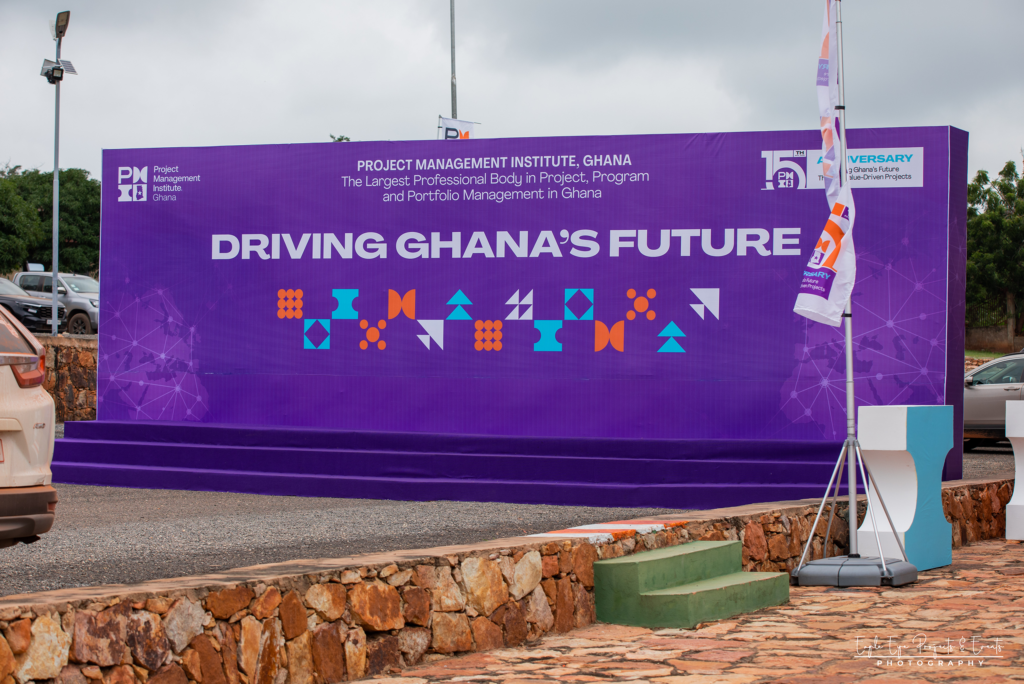
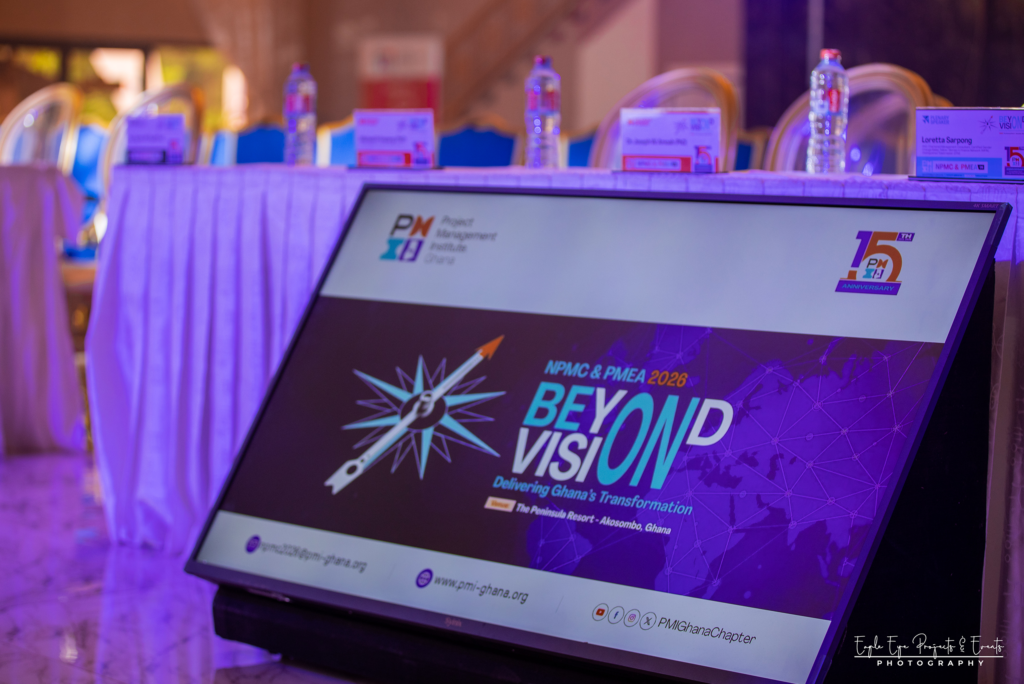
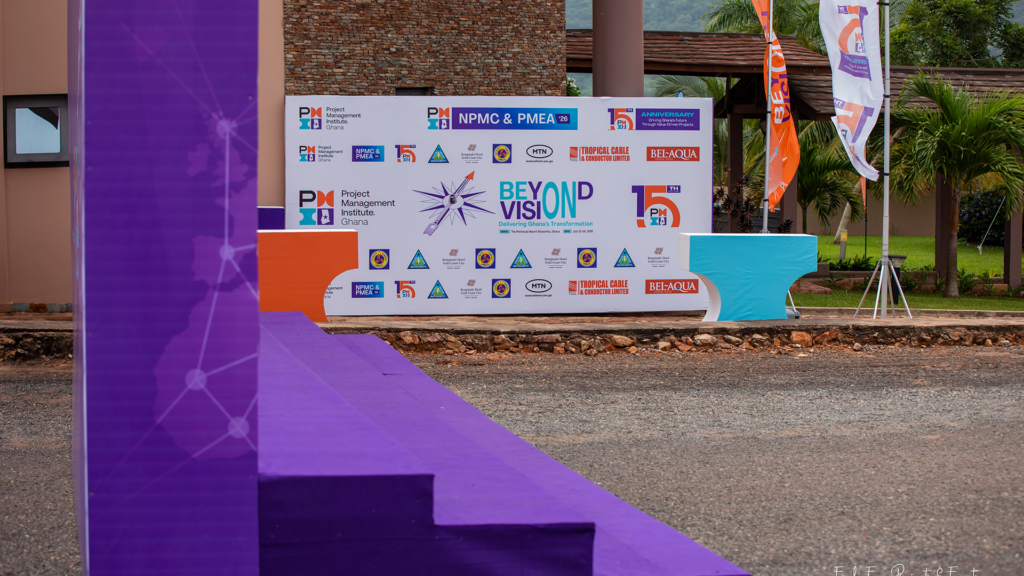
The Project Management Institute (PMI) Ghana Chapter recently marked a monumental milestone, celebrating 15 years of driving national growth through structured execution. The 2026 National Project Management Conference & Project Management Excellence Awards (NPMC & PMEA 2026) gathered hundreds of practitioners, policymakers, and industry leaders under the timely theme: “Beyond Vision; Delivering Ghana's Transformation. Celebrating 15 Years of Driving Ghana's Future Through Value-Driven Projects”. Held over two dynamic days, the formal event served as a critical platform for steering national development from abstract ideas into disciplined, high-value execution.
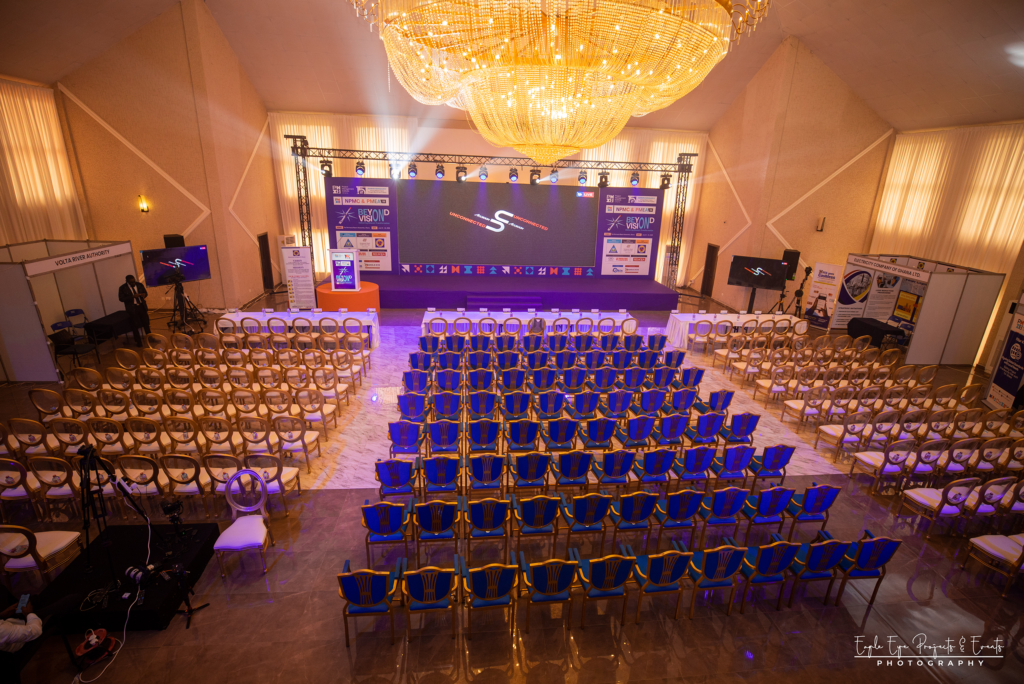
Day 1: Laying the Framework for Transformation
Opening Governance, Safety Metrics, and Strategic Frameworks
The conference commenced with high-level protocols, beginning with an opening address by the Chapter President, Frank Owusu-Asamoah, followed immediately by the Welcome Address. The morning featured two major structural advancements launched officially by the President of the Republic: the Ghana Integrated Project Management Framework and the National Project Advisory Hub. These initiatives aim to institutionalize standardized project delivery practices across public and private sectors to minimize structural waste.
Following these institutional rollouts, Ike Nwankwo, serving as the Guest of Honour, delivered the Special Guest Speaker's Address. Directly after, Mr. Edward Ato Sarpong delivered the Opening Keynote Address, setting the foundational baseline for structural strategy.
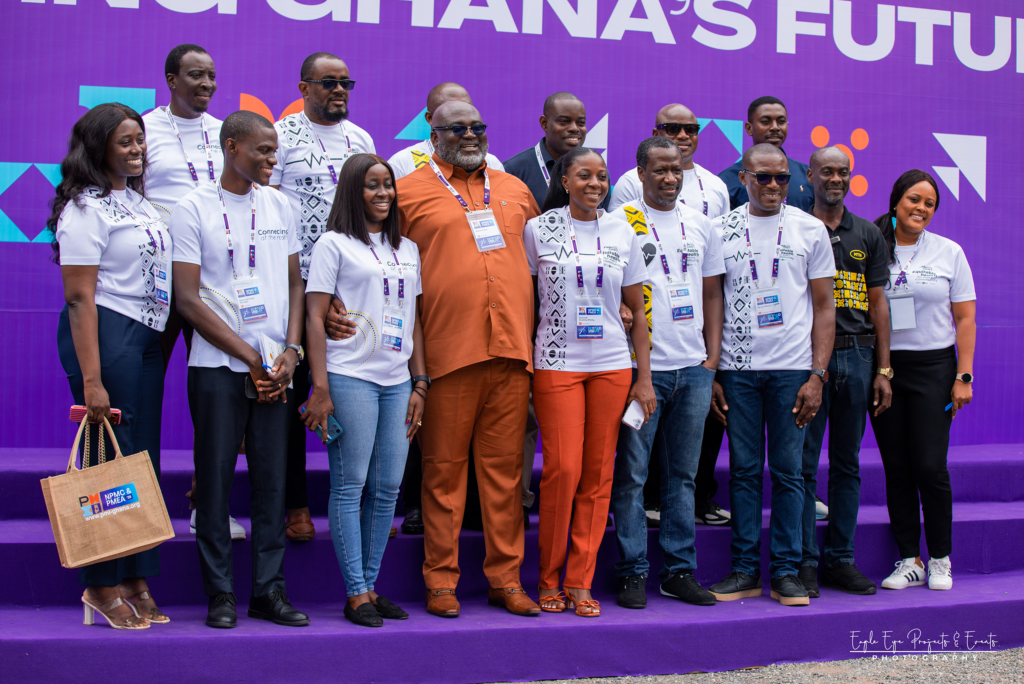
During an engaging Q&A segment within the morning sessions, a key guest speaker, Dr. Amani, addressed localized logistical and safety anxieties head-on regarding an upcoming regional PMI gathering slated for Cape Town. Responding to concerns about safety protocols, Dr. Amani offered personal reassurance to the audience. He pledged to personally fly into Johannesburg and transit to the Cape Town venue ahead of schedule, committing to experience the security conditions first-hand to guarantee a safe and secure environment for all international delegates. Following a brief group photograph session, attendees adjourned for the designated Tea and Networking Break.
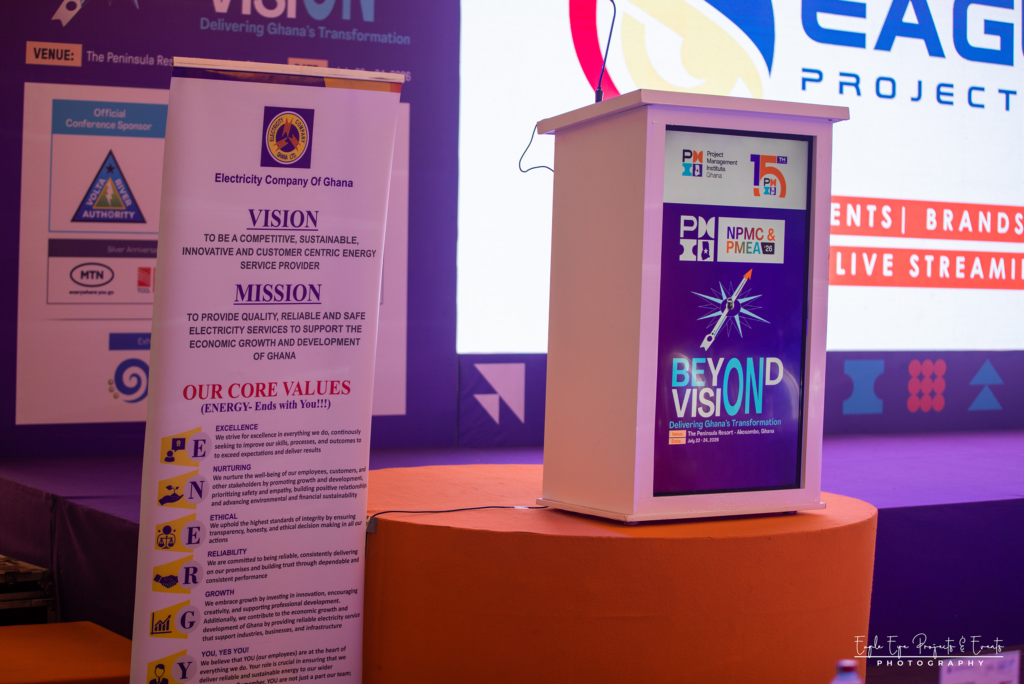
"We must re-engineer our procurement mindset. True transformation
lies in balancing economic sustainability with rigorous project
governance, choosing long-term value over temporary cost-cutting."
— Loretta Sarpong, Plenary Session 1
Procurement Economics and Human Capital Development
The afternoon sessions shifted the focus toward economic sustainability and human capital. Loretta Sarpong led Plenary Session 1, presenting on “Beyond Vision: Delivering Ghana's Transformation - The Economics of Delivery: Value for Money vs. Lowest Bidder,” targeting critical flaws in traditional procurement frameworks.
Following the lunch break, the conference split into highly specialized parallel breakaway tracks:
- ● Track A: Bernard Blewusi presented “From Expat to Expert: How Empowering Local Project Managers Delivered MTN Ghana's 4G/LTE Rollout and What it Means for the Next 15 Years”. Blewusi highlighted local empowerment by demonstrating how leaning on homegrown expertise serves as the precise blueprint for upcoming infrastructure growth.
- ● Track B: Michael Frimpong led an impactful session titled “The Convergence of Project Management and Leadership: How Executive Sponsorship and Team Engagement Contribute to Project Success”.
- ● Track C: Joseph Willie Amoah delivered a strategic presentation titled “From Vision to Delivery: Reframing Ghana's Petroleum Hub as a Corridor Programme Rather than a Refinery-Led Megaproject”. Digital Adoption and Gender Inclusion in Governance The late afternoon transitioned back to comprehensive plenary modules. Clifford Oppong spearheaded Plenary Session 2, addressing “Beyond Digital Adoption: Leveraging Engineering Technology for Productivity, Project Delivery, and Ghana's Transformational Agenda”. After a brief tea break, Charles Boateng delivered Plenary Session 3, focusing on “From Vision to Bankability: Closing Ghana's Project Delivery and Investment Readiness Gap”. Day 1 culminated in an expert panel discussion featuring Dr. Carine Lesley Malor, Ing. Agnes Afi Fugah Esq, Salimatu Azuma, and Majorie Quansah. Their session, “Local Content & Capacity: The Ghanaian Female Project Manager,” critically analyzed gender diversity, corporate equity, and leadership expansion within the Ghanaian industrial landscape. The first day concluded formally with closing remarks from President Frank Owusu-Asamoah. Day 2: Innovation, Sustainable Agriculture, and AI Integration Early Morning Power Games and Climate Resilience Day 2 kicked off early at 6:00 AM with high physical energy. Attendees abandoned their formal wear briefly for an intensive calisthenics and networking session, dubbed the Power Games, designed to promote health, wellness, and organic professional synergy. Following a mid-morning break, the conference resumed its structured presentations. Harriet Assiedu and Dr. Frederick Sarpong opened Plenary Session 4, presenting “Transforming
Ghana's Artisanal Oil Palm Milling Sector for Climate Resilience, Sustainable Development, and Rural Transformation”. Their session highlighted the intersecting needs of environmental compliance, rural development, and localized industrial modernization.
"Genghis Khan once said that he would like to conquer the known
world and leave every mother in tears. My dream, in return, is that
I want to make the world a better place and make everyone happy,
make every mother happy."
— Hon. Abraham Dwuma Odoom, Keynote on Agriculture
The Keynote Address: Agricultural Transformation and CSR
At 11:45 AM, the main event featured a deeply inspiring keynote address by Hon. Abraham Dwuma Odoom on “Agriculture & Transformation”. Hon. Odoom shared his remarkable personal journey, recounting how he started his agricultural endeavors from humble origins with just a single seed of a crop. Through strict adherence to sustainable agronomic practices, his farm eventually caught the attention of a passing government convoy. Instead of facing an administrative eviction, arriving state officials were so amazed by his sustainable models that they asked him to design a blueprint to scale those practices nationwide to drive the agricultural sector forward.
He also shared his commitment to corporate social responsibility (CSR) and community dialogue. When offered a major development deal, he successfully negotiated a site swap: taking an old district school that was completely in ruins, rebuilding a new school from scratch for local children, and renovating the old structure into a fully functional nursing institution.
Odoom concluded his presentation with a strong call for the digitization of the agricultural sector to incentivize tech-savvy youth to view farming as a lucrative, sustainable career path. His presentation earned a booming, enthusiastic standing ovation from the entire auditorium. He openly wondered aloud why successive Ghanaian administrations have yet to formally tap his expertise to implement similar transformational agricultural strategies at home.
Following this presentation, George Asamani, the PMI Sub-Saharan Africa Managing Director, delivered a vital regional overview message reinforcing global project management standards across Africa.
Modern Capacity Building and Dismantling the Fear of AI
Following the afternoon lunch break, the conference shifted into its final round of specialized capacity building workshops:
- ● Track A: Leslie Selasi Kwesi Des Bordes presented “From Vision to Value: Strengthening Project Delivery System for National Transformation in Ghana”.
- ● Track B: Abraham Aguriba targeted green innovation in “Smart Sustainability: Leveraging AI, ESG and Green Finance to Achieve Net-Zero in the Built Environment”.
● Track C: Dr. Carine Lesley Malor led a vital session titled “From Execution to Transformation: Reimagining Project Management in Ghana for Long-Term Development”.
Dr. Malor used her session to urge project management professionals to eliminate their fears surrounding Artificial Intelligence (AI). She stressed that AI is not an administrative threat to employment but rather the bedrock of future operations. She demonstrated that AI is capable of handling tasks far beyond basic text query generation—serving instead as an automated engine to optimize risk management, handle complex predictive data analytics, and dramatically elevate project productivity.
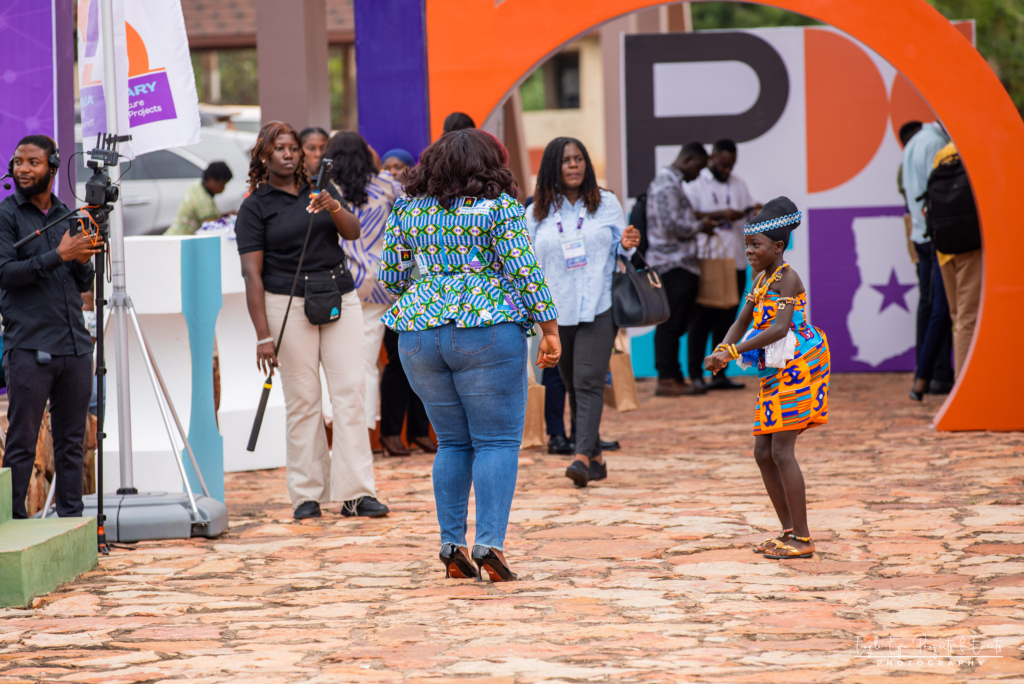
A Grand Finale: The PMEA 2026 Awards Gala
The historic 15th-anniversary conference culminated in a spectacular, high-class dinner and the presentation of the Project Management Excellence Awards (PMEA 2026). The evening recognized exceptional project managers, teams, and corporations that demonstrated unparalleled governance, execution excellence, and deep social impact over the past year.
The highlight of the evening was the presentation of the premier accolades across eight distinct winner categories, alongside highly competitive runner-up distinctions:
- ● Project of the Year & Telecom Sector Leader: MTN Ghana emerged as a dominant force of the night, securing the coveted Project of the Year Award and the Telecom Project of the Year Award for its massive 2025 Home Go-Bigger FTTH Project. The Electricity Company of Ghana (ECG) followed closely as the 1st Runner Up for its Obuasi Bulk Supply Point (BSP) & 33kV Interconnecting Circuit (ICC) Project, while the Volta River Authority (VRA) achieved 2nd Runner Up honors for the Akosombo Generation Station Emergency Power Recovery Project.
- ● Project Manager of the Year: Executive distinction was achieved by Edward Ohene Antwi Boasiako, who was officially crowned the Project Manager of the Year. Manuella Asianoa took home the 1st Runner Up trophy, and Ing. Felix Kwasi Akpagloh secured the 2nd Runner Up spot.
- ● Institutional & PMO Excellence: The Electricity Company of Ghana (ECG) swept major organizational honors, winning PMO of the Year for the ECG Corporate PMO, IT Project of the Year for its ERP Transformation Project, and the State Organization Project of the Year Award for its highly impactful Loss Reduction Project (LRP). In the PMO category, the MTN Ghana Transformation Office took 1st Runner Up and the GCB PMO earned 2nd Runner Up honors. For IT Projects, ECG's Network Management Project took 1st Runner Up, and MTN Ghana’s CS HW Expansion (CIS NextGen) placed as 2nd Runner Up.
- ● Banking Sector Innovation: GCB Bank took home the top prize as the Bank Project of the Year Winner for its sophisticated Calypso Treasury Software Project. Consolidated Bank Ghana (CBG) followed as 1st Runner Up with its Agency Banking Program, and ABSA Bank was named 2nd Runner Up for its Corporate Transformation Digital Onboarding Project.
- ● Social Impact and NGOs: Showing that project management remains crucial to social
transformation, Africa HPO won the NGO of the Year Award for its vital Bullying Prevention and Mental Health Promotion initiative.
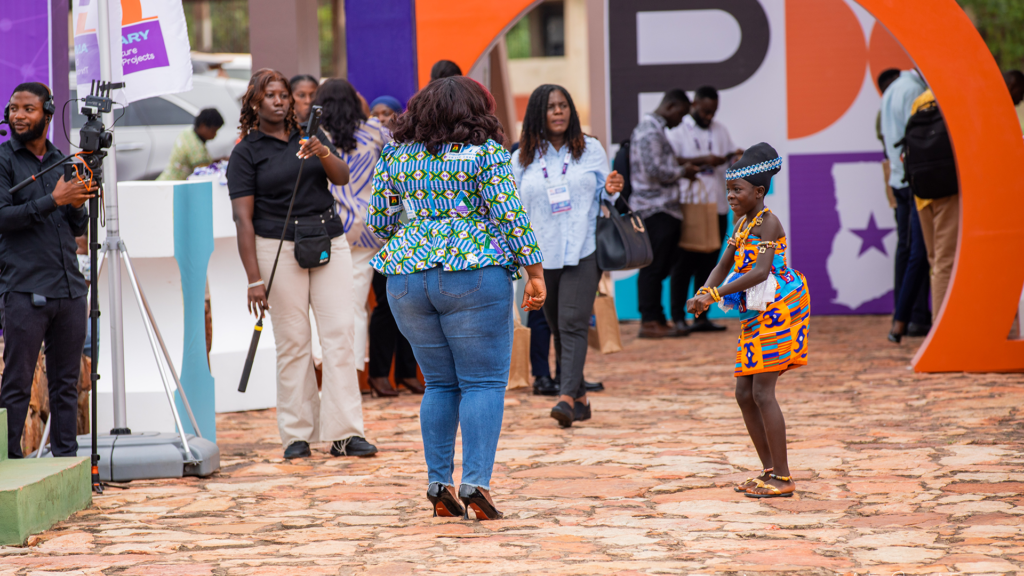
Complete with music, elite professional networking, and a vibrant dance celebration, the grand gala event concluded formally at 10:00 PM, leaving attendees fully equipped and inspired to deliver tangible transformation across Ghana.